

By Muhammad Bakari Tukur
Since assuming office on May 29, 2019, Governor Ahmadu Umaru Fintiri has played a significant role in shaping the political and developmental direction of Adamawa State. His emergence at the time was accompanied by high expectations, particularly following an energetic campaign that reached every part of the state, from the 21 local government areas to the 226 wards.
During that campaign, he made bold promises to the people. Those promises raised hope among citizens who wanted a government that would respond to their needs and move Adamawa forward. Years later, many would argue that his administration has made considerable efforts to meet those expectations.
There is no doubt that Fintiri’s government has recorded achievements that have earned him public recognition.
In many respects, his tenure has been defined by a visible attempt to deliver the dividends of democracy and justify the trust reposed in him by the electorate. This is why many residents today speak of his administration with appreciation. Indeed, it would not be out of place to describe him as one of the better governors Adamawa State has produced. His legacy, built over the years through governance and service, deserves to be acknowledged fairly and without unnecessary political distortion.
Yet, while his performance in office deserves praise, the issue of succession must be treated differently. A governor may leave behind a legacy, but he does not own the political future of the state. In a democratic setting, the choice of who becomes the next governor belongs to the people and the people alone.
This distinction is very important. The people of Adamawa may appreciate Fintiri for what he has done, but that appreciation should not be mistaken for an obligation to accept any particular successor.
Governance is one thing; succession is another. One is about service already rendered, while the other is about the future that citizens must freely decide for themselves. For that reason, any political developments surrounding succession should not diminish Fintiri’s contributions.
He has done his part as governor, and his work should be respected on that basis. His achievements remain valid, regardless of what debates may arise about who comes next. As he approaches the end of his tenure, what he deserves most is recognition for his effort and goodwill toward the state.
Those who mean well for Adamawa should be able to commend him for the legacy he has built, while also reserving the democratic right to make an independent choice about the future.
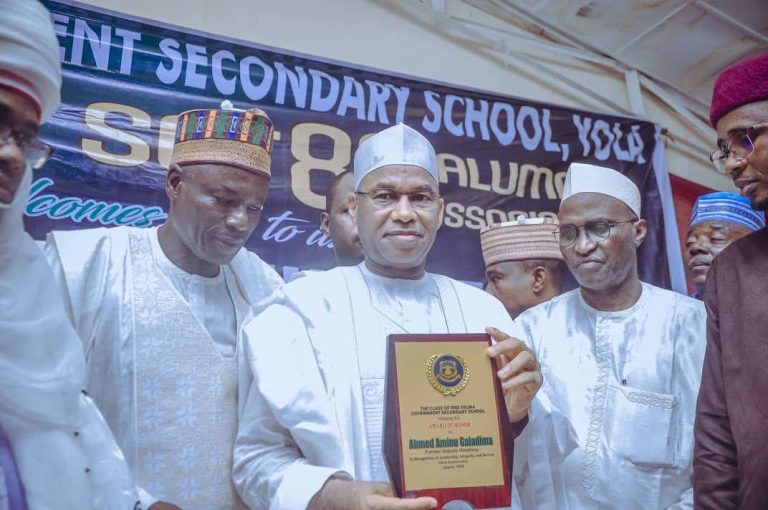
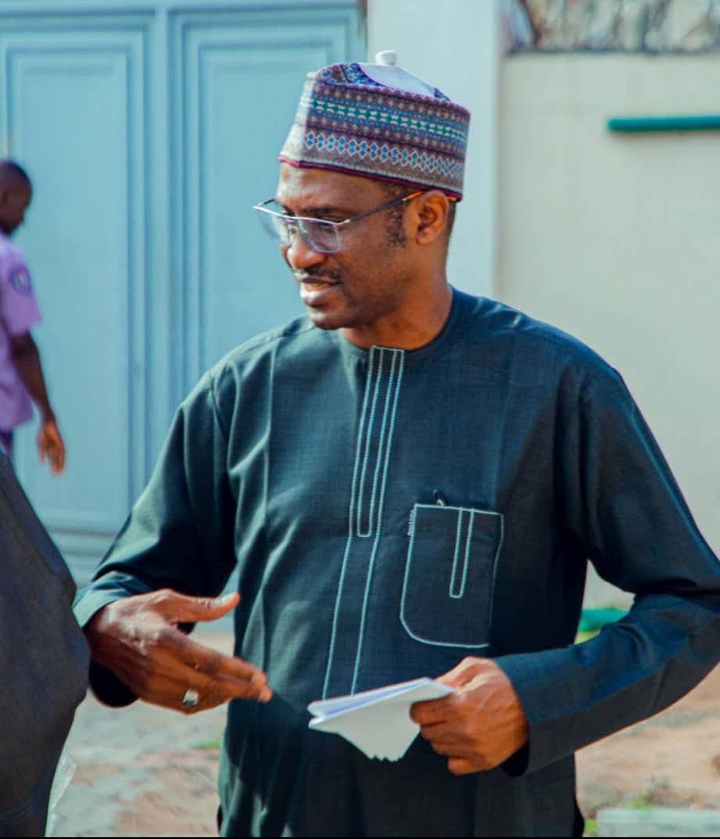
That future may now include Alhaji Tijjani Ahmed Galadima, who has emerged as the APC’s new political standard-bearer.
His appearance on the scene has added a fresh dimension to the debate about Adamawa’s future leadership.
Naturally, his candidacy will attract both support and criticism, as all serious political ambitions do. But in assessing Galadima, the people should rise above narrow sentiments.
The state does not need another debate driven only by tribe or religion. What Adamawa needs is a sober evaluation of who has the vision, competence, and determination to build on the progress already made and deliver even more.
If Galadima has what it takes to sustain development and improve the lives of citizens, then there is no reason he should not be supported. Every leader deserves to be assessed on merit, not merely on identity.
The future of Adamawa is too important to be reduced to sectional calculations. More than that, Galadima’s emergence symbolises an important shift in the politics of inclusion.
As a son of Adamawa Central Zone, his possible rise could open a new chapter in the state’s political history. It may provide an opportunity to strengthen unity and challenge old assumptions held across ethnic and regional lines.
Leadership has the power to heal divisions when it is guided by justice, fairness, and vision. If Galadima is given the mandate and proves equal to the task, he may not only continue the work of development but also help build stronger harmony among the different communities in the state.
No one can fully predict how history will unfold. But history favours those who are given the opportunity to serve and who rise above expectations. Galadima may yet emerge as one of the leaders who leaves a lasting footprint on Adamawa, just as Fintiri has done in his own time.
The people of Adamawa must therefore approach this moment with wisdom. They should honour the legacy of the outgoing governor while keeping their minds open to the possibilities of new leadership.
In conclusion, I call upon the great people of Adamawa State to open a new chapter and give Alhaji Tijjani Ahmed Galadima a chance. If he indeed possesses the capacity to lead, the vision to unite, and the determination to develop the state, then the people should give him the opportunity to prove it.
SARDAUNA NYIBANGO